Thursday, August 15, 2019

Can swarming drones map battles in real time?


FACTS

1) Quadcopters generally only have a range of up to 300 meters from the operator well within small arms range. 

2) Quadcopters with longer ranges of between 2 km to 7 km must emit a considerable EM signal. Thus with decent EW detection can easily find the operator.

3) Their endurance is typically between 8-10 minutes.

4) The longer range quadcopters can have up to 25 minutes endurance. 

5) Any payload will cut into the range and endurance. This is why deliveries via drone simply doesn’t make economic sense. 

6) A swarm of these demand computer control and significance EM emissions that would make it easily detectable allowing for easy destruction within the 7 km max range.

7) Quadcopters are all easily jammed. The Russians with their brute force approach to EW can drop entire swarms from the sky. 

https://www.c4isrnet.com/unmanned/2019/08/14/autonomous-robots-could-map-battles-in-real-time/


Can swarming drones map battles in real time?
By: Kelsey D. Atherton

With air and ground robots, DARPA tested autonomous systems built to scout and map an urban environment. (Kelsey D. Atherton / YouTube Screenshot)

Against the gray sky, the black robots hum. The swarm moves without words, mapping the neighborhood below, a flurry of buzzing and plotting, sharp angles and short orbits, creating in real time a blanket of surveillance over the selected objective. Part of DARPA’s OFFSET (OFFensive Swarm-Enabled Tactics) program, the quadcopters are pieces in a greater whole, an incremental step to providing an expansive robot’s-eye view to humans fighting on the ground.

The neighborhood in question for this exercise was an urban warfare training complex at Fort Benning, Georgia, in June 2019. Flying through and over the “Selby Combined Arms Collective Training Facility,” the quadcopters worked with ground robots to identify locations of interest and then create a perimeter around that objective, in a process DARPA likens to “the way a firefighting crew establishes a boundary around a burning building.”

Firefighting looms large in the modern conception of swarm tasks. In January 2019, the Air Force Research Laboratory, together with the UK’s Defence Science and Technology Laboratory, launched a project for drone swarms to model wildfires, with lessons applicable to military and battlefield uses. Finding danger and plotting a path for humans through it is an ideal task for robots.

In DARPA’s OFFSET exercise, the swarm had to find a mock city hall, an objective inside that building, and then provide situational awareness over the area in runs that lasted 30 minutes. Using commercial off-the-shelf machines and custom software, the program wants to create in real life as close to the kind of real-time tactical information a person might find in a strategy video game.

OFFSET is scheduled to have new exercises and new updates roughly every six months for the next two years, with the June sprint the second in the series. The end goal is for swarms of up to 250 drones to operate autonomously, providing real-time information to humans who can then move through the battlefield confident that the area has at least been robotically scouted and monitored.

As the Pentagon’s blue-sky projects wing, DARPA is focused on advancing the technology to the point where it can be picked up and refined by other labs or industry. Building tactics from the new capabilities, and machines specific to swarm-human teaming, will have to come later. It’s worth looking at the swarms as a possible component of future battlefields, and when designing technologies to meet the needs of the now, keeping an open mind to how swarms might change or hinder those same functions.

Watch below:

Sunday, August 11, 2019

Turkey to annex northern Syria with US blessing


The Turks, or at least Erdogan and the AKP and probably the MHP nationalists and populists who are the vital junior partners in the ruling gov’t, strongly support a conflict in northern Syria.

Ankara wants to take over and “finish the job” that the Turks believe the US and reactionary regimes like Jordan and KSA screwed up—destroying the “Shi’a Crescent.” Turkish action involves crushing the Syrian Arab Army, putting the alQaeda wing of SDF in charge of Damascus, and wiping out the Kurds… and then, eventually, repeating a similar process in Iraq.

These actions will also enable the Turks and Qataris to mount a serious challenge to Iranian dominance in the Persian Gulf. Ankara has Qatari money and connections behind them, and the Turks think they can count on the US/NATO to protect them if things go badly because the Russians and/or Iranians oppose them. However, Ankara will get no support from NATO and Washington would be foolish to back Turkish aspirations.

The Israelis will welcome this development as a guarantee that Iran will be isolated from Its ally in Lebanon. In addition, Turkish intervention promises an enduring struggle for control of Mesopotamia between Sunni Islamist Turkey and Shiite Iran. The outcome suits Tel Aviv. Of course, Tel Aviv puts its own security at risk with alQaeda friendly forces in Damascus and Turkish Forces Near it’s Northern Border, but that appears to be their plan.

Clearly, we should withdraw from Syria ASAP and disengage from Iraq as well. Keeping US troops in the region risks involvement in a regional conflict that we don’t need to fight. This will also further weaken, if not, destroy what’s left of NATO. Christians in the region will be driven out or killed.

https://www.asiatimes.com/2019/08/article/for-paul-turkey-to-annex-northern-syria-with-us-blessing/

Turkey to annex northern Syria with US blessing

Ankara outmaneuvers Washington, weeks after crisis in relations over purchase of Russian S-400 missile system

Kurdish fighters attend the funeral of a Syrian Democratic Forces fighter in the town of Tal Tamr in Syria's northeastern Hasakeh province on December 21. Observers say the planned withdrawal of American forces from Syria will put Kurdish fighters in Turkey's crosshairs. Photo: AFP

The United States military, desperate to avoid an open confrontation between its NATO ally and Kurdish clients, has capitulated in a game of chicken with Ankara, agreeing to an occupation zone across northern Syria.

The announced agreement comes just weeks after US lawmakers threatened Turkey with sanctions over its purchase of the Russian S-400 missile defense system. By threatening an imminent attack on the Kurdish YPG militia – America’s ally against ISIS – Ankara appears to have obtained a green light for a US-shepherded seizure of Syrian territory.

The so-called “peace corridor” is expected to span the entire region east of the Euphrates River, stretching 460 kilometers, according to Turkey’s state news agency Anadolu. It will also go 32 kilometers deep into Syrian territory, putting Kurdish-held towns like Kobane – seized from ISIS in 2015 – under Turkish authority.

A statement by the US Embassy in Turkey said the agreement included the establishment of a “joint operations center in Turkey” in order to set up the zone, though it did not offer details on the size of the area or how the Pentagon plans to deal with its Kurdish allies of the past six years.

“The safe zone shall become a peace corridor, and every effort shall be made so that displaced Syrians can return to their country,” the embassy said.

The statement suggests that the area will become a dumping ground for Syrian refugees, who are currently facing an unprecedented crackdown in Turkey, including forced deportations.

The Syrian Foreign Ministry called the US-Turkish accord “blatant aggression against the sovereignty and territorial integrity of the Syrian Arab Republic and a flagrant violation of the principles of international law and the UN Charter.” There was no indication, however, that Damascus was prepared to send troops into the fray.
Doomed deal

The US blessing for a Turkish zone of influence across northern Syria came after Ankara threatened to invade unilaterally in order to rid the area of the YPG – the sister group of Turkey’s blacklisted Kurdistan Workers’ Party, the PKK.

“We entered Afrin, Jarabulus, and Al-Bab [in northern Syria], and now we’re going to enter east of the Euphrates,” Turkish President Recep Tayyip Erdogan said August 4, alluding to the Euphrates Shield and Olive Branch operations of the past three years, which resulted in de-facto annexation of those Syrian towns.

It is unclear how the new, purported agreement with Washington will avert open conflict.

“What I see is the United States making a last attempt to prevent Turkey from taking a unilateral step,” said Mutlu Civiroglu, an analyst focusing on Kurdish affairs. “It’s an effort to gain some time, like in a soccer game.”

Nicholas Heras, an analyst at the Center for a New American Security, echoed those comments. “The entire plan now is to keep on giving the Turks some wins that can hold off an invasion,” he said.

The gap between the two governments remains vast.

While Ankara aims to seize full control of the YPG-held areas along its border, the Kurds are pressing for an international force to oversee any proposed safe zone, according to a July 31 International Crisis Group (ICG) report.

“Washington can protect the YPG or strengthen its ties with Turkey, but it cannot do both,” the ICG said.

Should the Kurds find themselves exposed to Turkish attack, they will likely redeploy forces from areas vulnerable to an ISIS resurgence, which in the US view risks wiping out gains of the years-long campaign.

Since the start of the Syrian civil war in 2011, Kurdish forces have worked to avert confrontation with Assad’s forces. They were equally skeptical of the opposition, which was quickly dominated by Islamist factions – some of whom now operate as mercenaries in the service of Turkey.

Over the course of the conflict, the Kurdish YPG repeatedly clashed with Islamist factions, most notably ISIS. That war effort gained them the air support of the United States, which continues to operate alongside the Kurds in northeastern Syria – much to its ally Turkey’s chagrin.

It is unlikely that Marxist Kurdish guerrillas will accept the deal without a fight and succumb to rule by Turkish troops and their Syrian allies.
Afrin model

The fate of the towns to be included in the Turkish “peace corridor” will likely mirror that of other regions annexed by Turkey and its allies in the northern countryside of Aleppo.

Those areas included the Kurdish-majority town of Afrin and its surrounding villages, seized more than a year ago. The takeover carved out a safe haven for tens of thousands of defeated rebels and their families, while displacing half the local population.

Afrin this season shipped its most famed product, olive oil, from its vast orchards to Turkey, whose authorities insist they must prevent the profits from falling into the hands of the ousted PKK.

Schools now enforce gender segregation, Turkish flags fly over public buildings and portraits of Turkish President Recep Tayyip Erdogan hang in shops, according to residents interviewed by Asia Times.

The battle for Afrin was relatively quick, as it was isolated from other Kurdish-held areas. But the proposed “peace corridor” includes hundreds of kilometers of contiguous YPG-held territory. US troops are still deployed in the area, though their presence has been significantly reduced.

Tuesday, July 30, 2019

RPI Conference Speaker Line-Up!


Breaking Washington's Addiction to War

by The Ron Paul Institute for Peace and Prosperity

https://www.eventbrite.com/e/breaking-washingtons-addiction-to-war-tickets-62781334662?aff=odeimcmailchimp&mc_cid=f01000bb75&mc_eid=e922f50b7b

Date And Time
Sat, August 24, 2019
9:30 AM – 3:30 PM EDT

Location
Washington Dulles Airport Marriott
45020 Aviation Drive
Dulles, VA 20166

Refund Policy
Refunds up to 1 day before event

Description
Your ticket includes a hot lunch and refreshments through the day!

$80

(Partial) Speaker List for Conference. More speakers to be added!

Breaking Washington's Addiction to War

August 24th, 2019

Dulles Airport Marrriott

Dulles, VA

Daniel McAdams - Non-interventionism or "sometimes-interventionism?"

Fmr. US Rep. John Duncan, Jr. - An antiwar conservative.

Nathan Goodman (George Mason University) - The economic costs of US empire.

Rick Sanchez - (RT America news anchor, former CNN) - Lies: The dismal state of mainstream media in the US.

Larry C. Johnson (former CIA officer) - The myth of Russian interference.

Col. Douglas Macgregor - (Retired highly-decorated combat officer and frequent guest on Tucker Carlson show) - The insanity of neocon Iran war plans.

David Stockman - (Former US Congressman and Director of Management and Budget [Reagan Administration]). NATO? No!

Lew Rockwell, Founder of the Mises Institute and LewRockwell.com

Ron Paul - Keynote.

Washington is in a constant state of war frenzy. The question of how to manage global challenges seems to be always met with the same answer: threaten sanctions and move military assets. Thus, the US sends carrier strike groups toward Iran, into the Black Sea, into the South China Sea, and elsewhere to make it clear that force is the only language spoken by the United States government and its national security apparatus.

US sanctions cripple a targeted country's economy, punishing the civilian population for the alleged sins of their leaders.

"Diplomacy" means it's Mike Pompeo's State Department issuing the threats instead of the Pentagon or John Bolton.

Meanwhile, Washington's aggressive approach to the rest of the world is backfiring. Far from our becoming more engaged, sanctions and threats of war actually push former enemies to forge alliances to sidestep dealings with the US. The Europeans have been trying to create a system of trade with Iran that bypasses the US, which has reimposed sanctions. Russia and China cooperate with an eye on ending dollar hegemony. Peace talks take place among warring factions in places like Venezuela and Ukraine without the US being invited to participate.

With war drums getting louder, no one seems to really be in charge.

No longer does even the president seem to have control over the war machine. No sooner does President Trump announce that we've won in Syria and are bringing the troops home, than his national security advisor or someone else in his administration issues a "clarification" that nullifies the policy declaration.

Congress? Has anyone heard much from Congress? Or have they wasted two years on either side of "Russiagate"?

This summer the Ron Paul Institute will gather a beyond left/right group of expert speakers to take a hard look at why our foreign policy is a miserable failure and why it has been a miserable failure for US administration after administration.

In post-Mueller, post-Russiagate America, why are Beltway "experts" and their allies in the mainstream media still acting as if today's Russia is a far more deadly enemy than Stalin's Soviet Union? Who benefits and why?

After the almost complete defeat of US and allied-backed jihadists in Syria, why do the State Department and Pentagon still pursue "Assad must go" policies?

Why does Washington insist that the citizens of Iran and Venezuela must starve until their leaders capitulate to neocon demands?

Most importantly: who are the true isolationists? Are they we non-interventionists who promote America's original foreign policy of peaceful relations with all who seek the same? Or are they the sanctioners, the war-threateners, the dictat-deliverers?

Join the Ron Paul Institute and friends this August 24th and be a part of a unique Washington Beltway experience: a beyond left/right coalition of progressives, libertarians, conservatives, and beyond, who are hammering out a new foreign policy that actually benefits the United States instead of the well-connected elites. A foreign policy of peace.

Important notice: There are a limited number of rooms available for a special discounted rate of only $99/night for the August conference. Use this link to book your special room rate, or call (800) 228-9290 and say you will be attending the Ron Paul Institute event with code RPI.

This does not support the desired narrative!


https://theintercept.com/2019/07/29/pentagon-study-africom-africa-violence/ 

The ACSS is a good research shop so of course it's inexpensive and under appreciated.

Saturday, July 6, 2019

The Ingraham Angle 7/5/2019


How the Haters Misread Trump's Foreign Policy
Media Can't Let Go of Their Russia Obsession
https://youtu.be/uw7K71XGfek


Thursday, July 4, 2019

Of Interest: What Is Trump’s Military Parade Actually Celebrating?

Thursday's rally will feature tanks, flyovers and soldiers. But after 17 years of failed war policies, there's not much to salute. 


By GIL BARNDOLLAR • July 4, 2019

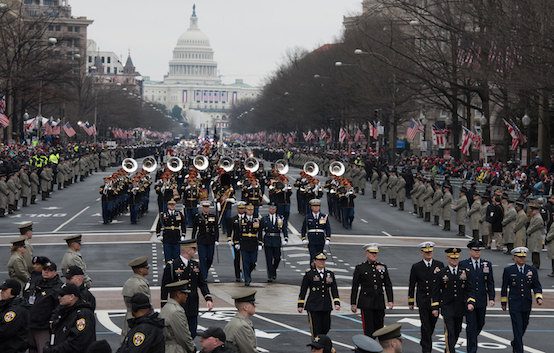
Presidential Inaugural Parade in Washington, D.C., January 20, 2017. (U.S. Army photo by Sgt. George Huley)

Washington is getting Trump’s martial parade after all. Today the capital will see fighter jet flyovers, marching Marines, and a pair of Abrams tanks squatting like mastiffs on the National Mall. It will surely be politicized and cost millions. But this “Salute to Service” has a far bigger problem: what the hell are we celebrating?

Certainly not victory in the GWOT (Global War on Terrorism). For all the unquestioned valor and dedication of our servicemen, our military is 0 – 2 in wars against ill-equipped insurgents since 9/11. Toss in the crusade to kill Qaddafi and we’re 0 – 3 above the tactical level. The jury is still out on Syria.

America has spent nearly $6 trillion in the war on terror. The cost to the countries we broke is incalculable. Afghanistan and Libya will continue their civil wars for years, if not decades. Iraq could easily join them again.

Okay, so how about celebrating the force itself? Today’s tributes, honestly, will come off as empty as any Starbucks salute. Since 9/11, we have lost nearly 7,000 men and women in combat and have returned at least 350,000 mentally and physically damaged veterans to their communities. Yet the VA remains a work in progress, at best.

The All-Volunteer Force is struggling. The Army failed to meet its recruiting goal last year, for the first time since 2005. The Marine Corps is throwing up to $280,000 at pilots to keep them from fleeing to the airlines. The Army’s Training and Doctrine Command admits that our current micro-managed operations are eroding the decision-making abilities of junior leaders. Those in uniform are only too aware that “special trust and confidence” and “mission command” are empty pronouncements. And they also know that most Americans have no skin in the game.

The gear is in worse shape than the guys. The F-18s overheard today will presumably be fully mission capable but most Super Hornets aren’t—the result of unanticipated operating hours spent chasing ghosts in the Greater Middle East. The United States could use more F-22s in the air than MRAPs, absurdly, in the hands of American policemen. The U.S. Navy may be too small to check the Chinese—and its ships keep running into things.

True, we haven’t had a major attack on “the homeland,” but one can’t help suspecting that there were cheaper ways to get that result.

So taken it all in, there seems little to really celebrate by way of the military. For Washington, though, there have been some wins. The machine churns on. Eisenhower, that Cassandra, has been dead for fifty years and the Soviet Union packed up shop almost three decades ago but the military industrial complex hasn’t missed a beat. Tyson’s Corner is booming, the defense budget climbs steadily upwards, and the revolving door is in rude good health. It turns out there is at least one industry where trickle down economics works.

Best of all, there’s no accountability. No one has to pull a Profumo and atone. The architects of the Iraq War don’t even have to stop talking. You can see them around DC on a weekly basis, if you know where to look. Paul Wolfowitz gets slapped on the back by journalists at charity dinners. Max Boot descends from the Council on Foreign Relations, the high church of the foreign policy establishment, when he has a new book to hawk. John Bolton even gets a final round in the arena, blowing up accords and agitating for war, though his days in this administration may finally be numbered.

The generals get it best of all. Vince Lombardi had it backwards. Winning isn’t everything —it isn’t even anything. You can find David Petraeus on stage these days, bragging about his cycling mileage and joking about his private equity sinecure. H. R. McMaster has a think tank perch, where the fabled victor of Tal Afar can decry American war-weariness while doing his best to find us new wars. Those further down the food chain, with only a star or two in their shadow boxes, can at least pick up a second career hawking weapons and services for Raytheon, Boeing, or one of the many other payers of McLean mortgages.

So enjoy the celebration. Most TAC readers, myself included, will be at more prosaic parades, far from Versailles on the Potomac. For those in D.C., go and enjoy the event if you can stomach it. One hopes that today’s crowd will include a few from that great sardonic breed of GWOT veteran—skinny Vonnegut completists who eschew the de rigueur vet beard—wearing one of the decade’s better black jokes: the “We Were Winning When I Left” t-shirt. Talk to those guys instead of just thanking them for their service.

Gil Barndollar is the Military Fellow-in-Residence at the Catholic University of America’s Center for the Study of Statesmanship. He served as a U.S. Marine infantry officer from 2009 to 2016, deploying to Afghanistan twice.

https://www.theamericanconservative.com/articles/what-is-trumps-military-parade-actually-celebrating/

Tuesday, July 2, 2019