Presentation to the Futures Seminar
Center for Strategic Leadership and
Development (CSLD)
U.S. Army War College,
30 March 2015
douglasmacgregor.com/awcpresentation.pdf
Monday, March 30, 2015

Friday, March 13, 2015
Erin Burnett OutFront Interview with Douglas Macgregor
STARR: Defense Secretary Ash Carter says the U.S. has the obligation in his words to protect those Syrian rebels. It sends back into Syria to fight. But who's going to do it?
President Obama has ruled out U.S. troops on the ground in combat. That leaves air power and it's going to be a real question whether U.S. pilots will take on any increased role over Syria -- Brianna.
KEILAR: Yes, very big question. Barbara Starr for us at the Pentagon, thank you.
And OUTFRONT tonight, we have Buck Sexton. He's the national security editor for TheBlaze.com. He's a former CIA Iraq analyst as well.
And we have retired Colonel Douglas Macgregor, as senior military fellow at National Defense University.
So, to you first Buck. We saw Barbara's piece. Iranian-backed militias gaining ground against ISIS in Iraq. You have Senator Bob Corker, he's the chairman of the Senate Foreign Relations Committee, opening this hearing today, warning that the U.S. is making Iraq a better place for Iran.
BUCK SEXTON, FORMER CIA COUNTERTERRORISM ANALYST: That's absolutely true. I mean, Iran is rushing into what is essentially a vacuum here, because of the fight against ISIS, there's been a major destabilization inside of Iraq. And the government of Baghdad is looking for allies. And, of course, the government of Baghdad is generally considered to be a Shia government by the Sunnis and the rest of the country.
And so, right now, the Shia government out of Baghdad is looking for Shia allies in Iran and they're getting them. And you're seeing Iran deployed, actually doing a lot of the fighting and having these militias do the fighting for them, whether they train or giving them arms or combination thereof.
And this is going to exacerbate the sectarian tensions that the administration has been saying for a long time. Well, we're hoping that they can overcome this with good services and good government. That's not happening at all. Right now, you have an Iranian Shia army on the march, whether it's actually Iranians or just individuals that are sponsored by Iran. And this creates major problems in a Sunni Arab majorities of this country.
KEILAR: Sure. But the government very married with Iran in its interest here.
Colonel Macgregor, how do you stop Iran here? If you're not open to, say, U.S. boots on the ground, how else do you stop Iran from expanding its hold?
COL. DOUGLAS MACGREGOR, SENIOR MILITARY FELOW, NATIONAL DEFENSE UNIVERSITY: Well, historically, Iran has been stopped repeatedly by the Turks and their Sunni Arab supporters. And I suspect that we are at the beginning of a long Sunni-Shia war and eventually, we'll see something like that happen again.
But, right now, we're universally hated and despised in the Arabian Peninsula by all of the Sunni Arabs for having installed Iran in power in Baghdad. Baghdad and southern Iraq are considered with great justification to be the satellite of Iran. So, what Iran is now doing, it's headed towards Mosul, which historically was part of Persia sometime ago. And that's a very dangerous thing, because there are 1.8 million people in Mosul and they are overwhelmingly Sunni Arabs.
We really don't want to be part of that fight. When we were in Fallujah, 75 percent of the population fled. There were 300,000 people in Fallujah. What happens when we have a million Sunni Arab refugees fleeing for Mosul?
This is a catastrophe that I think we would be better off staying out of it.
KEILAR: So, if you stay out of it, Buck, then, what's -- is there a solution? Does the U.S. just throw its hands up in the air?
SEXTON: Quite honestly, under this administration, we have been largely staying out of it. That's one of the decisions people are critical of this administration for taking. And that's why we had some of the problems we've seen in Iraq because ISIS was able to take Mosul, and essentially a blitzkrieg operation. Iran is rushing in as well.
(CROSSTALK)
KEILAR: -- the administration should have stemmed this before.
SEXTON: Well, yes. I think that the destabilization of Iraq that came from the withdrawal of all U.S. troops is -- we're now seeing the end result, or not the end result, but a sort of midpoint result of what happens then. I agree with the Colonel --
KEILAR: Short of some major occupation of U.S. troops, do you think that the U.S. would have been able to stem this?
SEXTON: I think it would have been in a better position to stop what's happening right now than where we are. I think that much is probably true. What to do now, though, the colonel is right this is just playing
out day by day, a sectarian civil war. That's what's happening here. We've actually seen this before in Iraq. And it was very difficult for U.S. troops, 150,000 plus of them to get that to stop.
We're heading right back there right now with Iraq. But the Shia option, essentially allowing Iranian-backed Shia militias to retake parts of this country currently held by ISIS is not going to happen.
He points out Mosul. He's actually correct. The Sunni Arab majority city over a million people there, in those areas the sectarian tensions would make recruits for the Islamic State, fighting -- people who aren't fighting for them are saying the militias are coming for me. These are groups that have not just killed U.S. soldiers, by the way, but have engaged in sectarian reprisals, bloody human rights violations against Iraqi civilians They haven't forgotten that. That's still happening in bits and pieces here and there. It will probably accelerate the more ground they take.
KEILAR: Sure. Colonel Macgregor, you respond to that. But also, what do you think the U.S. can do to stop ISIS here? And what is the end game look like do you think?
MACGREGOR: Well, first of all, ISIS is another of these Islamist organizations that given time will implode. The reason is very simple. This Islamist lifestyle, which involves the rigid application of Koranic law is an impossible way to live.
ISIS is already losing ground and support because the Sunni Arabs that live around it don't support it. If we become involved, we will actually mobilize Sunni Arabs against us. We'll probably rescue ISIS from defeat, at least in the short run.
In the long run, I don't think we should involve ourselves in war that has nothing to do with us.
KEILAR: All right. There we have it. The word from Colonel Macgregor, thank you so much.
Buck Sexton, thanks for being with us as well.
OUTFRONT next, new images of the Tsarnaev brothers' final night on the run accused of killing a police officer as SWAT teams closed on them. We are live in Boston.
And we have breaking news: Secret Service agents reportedly crashed their car into White House barriers. Were men assigned to protect the president driving drunk?
http://www.cnn.com/
Tuesday, March 3, 2015
What Should Congress Do About Ukraine?
By Doug Macgregor
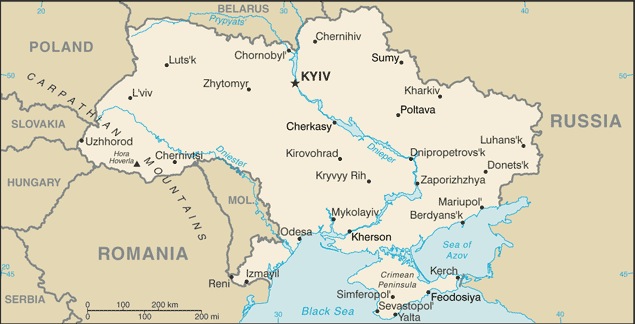
Poland suddenly reappeared in 1919, 120 years after it vanished from the map of Europe, sowing confusion at the Versailles Peace Conference as the great powers tried to heal the wounds of World War I. The British questioned the legitimacy of the new Polish State and the French were suspicious of Polish ambitions. Frustrated with allied reluctance to help Poland, Josef Pilsudski, Poland’s new leader told a French journalist:
“The great evil afflicting our country (Poland) is the fact that the Allies have no clear and definite program. We are left to face this big Eastern question all alone, because Europe does not know what it wants…We Poles are next-door neighbors to Russia… We have got to decide ‘yes’ or ‘no,’ peace or war. We cannot wait any longer.”
Poland refused to die. Marshal Pilsudski’s Polish forces counterattacked the next year, annihilating the Red Army and shattering Trotsky’s dream of marching over “Poland’s corpse” into Germany.
What are the parallels with Ukraine? Like Poland in 1920, Ukraine also refuses to die. Americans must engage in an authentic, unbiased appraisal of U.S. and allied military capabilities. Put more bluntly, in Putin’s next crisis, Washington and its allies may be compelled to put up or shut up. Consider the following:
Putin commands the Russian Armed Forces and its surrogates in Eastern Ukraine through the Stavka, the High Command of the Russian Armed Forces. The Stavka is staffed by talented officers that have risen through a highly selective professional general staff system. The High Command imposes absolute unity of command on all branches of the Russian armed forces. In contrast, the Joint Staff in Washington is a feckless organization with no command authority. The Joint Chiefs of Staff (JCS) are a committee of Service Chiefs focused on “service equities.”
Russian electronic warfare and cyber capabilities can interfere with many of America’s high precision weapons, GPS-based navigation and guidance systems, as well as our RF-based networking between tactical platforms and operational commands. Combine these problems with the practice of last minute lash-ups of Army, Marine, Air Force and Navy headquarters, and the scene is set for disaster.
Russian air defense technology is capable of identifying, tracking and potentially destroying every manned and unmanned aircraft in the U.S. inventory from AH-64 attack helicopters and A-10 Warthogs to the B-2 Bomber. In a contest with Russian forces in Ukraine, a confrontation could easily resemble the 1973 Egyptian-Israeli War along the Suez Canal. The reach and impact of American aerospace power would be severely limited. Given America’s history of predictable, sequential operations — first air, then, ground offensives — the probability of U.S. military paralysis early in a conflict with the Russians is high.
But Russian forces boast other advantages. They have a short commute to the battles from their bases in southern Russia. U.S. and allied ground forces would have to move at least 400 miles from the Polish border, or roughly the distance from Kuwait City to Baghdad, just to reach the staging areas in the Dnieper River valley. It is very doubtful that Mr. Putin would mimic Saddam Hussein, and simply do nothing while U.S. and allied forces built up and then move hundreds of miles of open terrain to attack him.
Russia is waging war in the Donets Basin or Donbass with tank and armored infantry formations heavily reinforced with rocket artillery and a host of strike systems, as well as, manned and unmanned aircraft. Under the Stavka’s direction, Russian forces are integrating the maneuver of mobile armored formations with the application of massive strikes against the opposing Ukrainian forces.
If the U.S. Army’s XVIII Airborne Corps and/or the Marine Corps, the French and British rapid deployment forces or the German Air-Landing Brigade were deployed to fight in the Donbass, their survival in contact with these Russian ground forces would be counted in hours, if not minutes. No amount of American or allied intelligence, surveillance and reconnaissance, (ISR) let alone strike from aerospace and naval forces can compensate for this weakness. But, today, these light forces constitute the majority of American and allied ground forces.
How meaningful and enduring the recently announced ceasefire between Kiev and Moscow will turn out to be is not known. But Putin’s gushing nostalgia for the Soviet Union of his youth suggests he thinks much like Stalin and would push Russia’s borders westward over Ukraine’s shattered remains.

The central question for America’s elected leaders is: what should Congress do?
Washington must not risk a future confrontation with Moscow, or for that matter, any great power, with ground maneuver forces that are organized, trained and equipped to defeat relatively lightly armed and equipped Arabs, Afghans and Africans.
First, the nation needs standing Joint Force headquarters in the regional unified commands. These are not JTFs thrown together at the last minute. They are staffed and equipped to rapidly integrate capabilities across service lines, and assimilate ground maneuver with the devastating, long-range precision strikes of aerospace and naval power in future conflicts.
Second, Congress must end the U.S. Army’s penchant for squandering billions of dollars on failed modernization programs, programs presented as “transformational,” but lacking an integrative strategy, a joint warfighting purpose and a realistic tactical foundation. If Army airborne, air-mobile and Marine Corps amphibious forces are useful only in “permissive environments” against weak opponents in the developing world, then scarce defense resources should be diverted from light forces into the development of new ground maneuver forces with modern mobile armored firepower. We need mobile ground forces that can take hits, fight and win against capable opponents like Russia and other great powers, not forces designed to police and combat hapless Arabs, Afghans and Africans.
Putin is restoring Soviet norms in Moscow’s foreign and defense policy. It’s why Congress should heed Józef Pilsudski’s “lesson learned” from dealing with the Russians: “When she (Russia) is weak she is ready to promise anything, but she is equally ready to break those promises the moment she feels strong enough to do so.”
Douglas Macgregor, a member of the Breaking Defense Board of Contributors is executive vice president of Burke-Macgregor Group, LLC, a defense consulting firm in Reston, Virginia. His newest book, Margin of Victory, will appear in the fall of 2015.
http://breakingdefense.com/2015/03/what-should-congress-do-about-ukraine/
Tuesday, February 24, 2015
Interview with Col. Douglas Macgregor (Ret.) about the state of US armed forces
February 24, 2015 by Campaign
This past weekend Right on Defense sent national security expert, decorated combat veteran, noted author and television commentator Col. Douglas Macgregor (Ret.) five questions about the state of the United States’ armed forces, current US operations in Iraq and Syria, and the size of the Pentagon’s budget. Many thanks to Col. Macgregor for responding to our request.
Right on Defense’s questions are in bold
This past weekend Right on Defense sent national security expert, decorated combat veteran, noted author and television commentator Col. Douglas Macgregor (Ret.) five questions about the state of the United States’ armed forces, current US operations in Iraq and Syria, and the size of the Pentagon’s budget. Many thanks to Col. Macgregor for responding to our request.
Right on Defense’s questions are in bold
 |
| Macgregor |
What are the real threats the United States faces today and is our military, in its current state, able to confront these threats?
1. China is too corrupt, too centrally managed, and most of its people have too little buying power for the PRC to remain economically healthy. As a result, China’s capacity to directly threaten its neighbors with military action is greatly exaggerated. China continues to view Japan as its principle threat. To the extent that Washington can it should mediate disputes and support freedom of access to the global commons, but otherwise avoid involvement in disputes between China and its neighbors.
2. Russia confronts serious internal decay, institutionalized corruption and permanent threats from Islamists in the South and tension with Japan in NE Asia. However, thanks to its reactionary leadership, Russia is likely to menace the peoples of Eastern and Northern Europe for the next two decades. Like Poland in 1920, Ukraine refuses to die. Fortunately, unlike the Arabs, the Ukrainians are not asking us to fight for them. This means only a change in Moscow’s leadership can produce a reasonable territorial settlement with Kiev that acknowledges Ukraine’s independence. Until that happens, the US should support the freedom and independence of the peoples of Ukraine, Poland, and the Baltic States with economic and military assistance, but otherwise avoid direct military involvement.
3. In the ME Sunni and Shia are locked in a struggle that is likely to last for decades. ISIS is a critical part of this struggle. In addition, the dysfunctional character of the world’s Muslim states and societies guarantees unrelenting violence until exhaustion and conflict produce change. To the extent the US is able, the US should avoid involvement in this regional violence.
4. Today, Mexico (along with much of Central America and Venezuela) qualifies as a failed states. The flow of criminality and human traffic from Mexico into the United States presents an existential threat to the American Republic. It is vital that we commit military resources to the security of our southern borders and littoral waters.
5. Long-term, the United States must develop armed forces to deter or defeat capable opponents, not light constabulary ground and air forces designed to bludgeon hapless Arabs, Afghans and Africans.
Bottom Line: The dysfunctional societies of Latin America present the greatest security threat to the United States. In the near-term ignoring the metastasizing cancer of criminality and corruption spreading into the US from Latin America could kill the American Republic.
In the long-term we cannot predict what nation-state or alliance of nation-states may attempt to dominate the Eurasian Land Mass and the “global commons.” We can only conclude that such a development is possible in 10, 15 or 20 years and begin preparing for it now without necessarily bankrupting ourselves in the process. To do that we need institutions and leadership we currently lack in national security.
How would you reform the military so that it is best able to confront these threats?
First, today, we have a president and SECDEF that must referee four independent services with conflicting agendas. Our defense structure is simply an anachronism left over from WW II. Its principle function is to redistribute income to districts, states, politicians and industrialists, not to effectively defend the United States. We need new leadership to address this critical issue and there is none for the moment on the horizon.
Second, in the absence of a national military strategy based on a rational defense budget the various services are operating independently. Each service seeks to justify itself and subsidize itself in perpetuity avoiding any change that might alter the status quo. Without a national defense staff that has the operational responsibility and authority to assist the President, the Secretary of Defense with command of the armed forces, the development of a coherent national defense strategy and the implementation of a rational defense budget tied to real national security interests this condition will not change.
Third, there is no human capital strategy to provide a national defense staff with the talent it needs to function effectively. There is also no real human capital strategy beyond the service academies to staff the armed forces with the leadership they need. Promotions to senior rank are a hit or miss proposition depending on personalities and political preferences. Enlisted ranks are treated with abject neglect on the assumption that more qualified enlisted men will always show up to do the job. There is scant evidence to support this assumption, but it prevails inside the uniformed leadership nonetheless.
What are your thoughts about current US military operations in Iraq and Syria?
These operations are unnecessary and largely counterproductive. The forces at war in the region will eventually exhaust themselves if left alone to do so. If we continue to intervene we will lengthen and worsen the conflicts. Our involvement should be limited to assistance to Egypt and Jordan, both of whom share our broader strategic interest in ending conflict. The rest including Turkey and Iran have agendas that are antithetical to Western and Israeli interests.
Jeb Bush and others have said that the Pentagon needs more money to be able to confront the threats they perceive the US faces. Shouldn’t the US be able to defend itself with the Pentagon’s $499 billion base budget and the additional $51.9 billion Overseas Contingency Operations (OCO) budget?
As previously mentioned, there is an abundance of resources and money, but neither the realistic thinking, the structure nor the vision to employ these resources effectively.
Many people say that OCO is being used as a “slush fund” of sorts to pay for things that should be in the Pentagon’s base budget. What are your thoughts about OCO?
OCO should be scrapped ASAP. It’s welfare for the defense industries.
Do you think that Congress and the military are doing enough to weed out wasteful spending at the Pentagon?
Despite vociferous claims to the contrary, nothing of consequence is being done.
http://rightondefense.org/
This
past weekend Right on Defense sent national security expert, decorated
combat veteran, noted author and television commentator Col. Douglas
Macgregor (Ret.) five questions about the state of the United States’
armed forces, current US operations in Iraq and Syria, and the size of
the Pentagon’s budget. Many thanks to Col. Macgregor for responding to
our request. - See more at:
http://rightondefense.org/#sthash.rmRSXFEb.dpuf
his
past weekend Right on Defense sent national security expert, decorated
combat veteran, noted author and television commentator Col. Douglas Macgregor
(Ret.) five questions about the state of the United States’ armed
forces, current US operations in Iraq and Syria, and the size of the
Pentagon’s budget. Many thanks to Col. Macgregor for responding to our
request.
Right on Defense’s questions are in bold.
- See more at: http://rightondefense.org/#sthash.rmRSXFEb.dpuf
Right on Defense’s questions are in bold.
- See more at: http://rightondefense.org/#sthash.rmRSXFEb.dpuf
his
past weekend Right on Defense sent national security expert, decorated
combat veteran, noted author and television commentator Col. Douglas Macgregor
(Ret.) five questions about the state of the United States’ armed
forces, current US operations in Iraq and Syria, and the size of the
Pentagon’s budget. Many thanks to Col. Macgregor for responding to our
request.
Right on Defense’s questions are in bold.
- See more at: http://rightondefense.org/#sthash.rmRSXFEb.dpuf
Right on Defense’s questions are in bold.
- See more at: http://rightondefense.org/#sthash.rmRSXFEb.dpuf
his
past weekend Right on Defense sent national security expert, decorated
combat veteran, noted author and television commentator Col. Douglas Macgregor
(Ret.) five questions about the state of the United States’ armed
forces, current US operations in Iraq and Syria, and the size of the
Pentagon’s budget. Many thanks to Col. Macgregor for responding to our
request.
Right on Defense’s questions are in bold.
- See more at: http://rightondefense.org/#sthash.rmRSXFEb.dpuf
Right on Defense’s questions are in bold.
- See more at: http://rightondefense.org/#sthash.rmRSXFEb.dpuf
February 24, 2015 by
This past weekend Right on Defense sent national security expert,
decorated combat veteran, noted author and television commentator Col. Douglas Macgregor
(Ret.) five questions about the state of the United States’ armed
forces, current US operations in Iraq and Syria, and the size of the
Pentagon’s budget. Many thanks to Col. Macgregor for responding to our
request.
Right on Defense’s questions are in bold.
What
are the real threats the United States faces today and is our military,
in its current state, able to confront these threats?
1. China is too corrupt, too centrally managed, and most of its people have too little buying power for the PRC to remain economically healthy. As a result, China’s capacity to directly threaten its neighbors with military action is greatly exaggerated. China continues to view Japan as its principle threat. To the extent that Washington can it should mediate disputes and support freedom of access to the global commons, but otherwise avoid involvement in disputes between China and its neighbors.
2. Russia confronts serious internal decay, institutionalized corruption and permanent threats from Islamists in the South and tension with Japan in NE Asia. However, thanks to its reactionary leadership, Russia is likely to menace the peoples of Eastern and Northern Europe for the next two decades. Like Poland in 1920, Ukraine refuses to die. Fortunately, unlike the Arabs, the Ukrainians are not asking us to fight for them. This means only a change in Moscow’s leadership can produce a reasonable territorial settlement with Kiev that acknowledges Ukraine’s independence. Until that happens, the US should support the freedom and independence of the peoples of Ukraine, Poland, and the Baltic States with economic and military assistance, but otherwise avoid direct military involvement.
3. In the ME Sunni and Shia are locked in a struggle that is likely to last for decades. ISIS is a critical part of this struggle. In addition, the dysfunctional character of the world’s Muslim states and societies guarantees unrelenting violence until exhaustion and conflict produce change. To the extent the US is able, the US should avoid involvement in this regional violence.
4. Today, Mexico (along with much of Central America and Venezuela) qualifies as a failed states. The flow of criminality and human traffic from Mexico into the United States presents an existential threat to the American Republic. It is vital that we commit military resources to the security of our southern borders and littoral waters.
5. Long-term, the United States must develop armed forces to deter or defeat capable opponents, not light constabulary ground and air forces designed to bludgeon hapless Arabs, Afghans and Africans.
Bottom Line: The dysfunctional societies of Latin America present the greatest security threat to the United States. In the near-term ignoring the metastasizing cancer of criminality and corruption spreading into the US from Latin America could kill the American Republic.
In the long-term we cannot predict what nation-state or alliance of nation-states may attempt to dominate the Eurasian Land Mass and the “global commons.” We can only conclude that such a development is possible in 10, 15 or 20 years and begin preparing for it now without necessarily bankrupting ourselves in the process. To do that we need institutions and leadership we currently lack in national security.
How would you reform the military so that it is best able to confront these threats?
First, today, we have a president and SECDEF that must referee four independent services with conflicting agendas. Our defense structure is simply an anachronism left over from WW II. Its principle function is to redistribute income to districts, states, politicians and industrialists, not to effectively defend the United States. We need new leadership to address this critical issue and there is none for the moment on the horizon.
Second, in the absence of a national military strategy based on a rational defense budget the various services are operating independently. Each service seeks to justify itself and subsidize itself in perpetuity avoiding any change that might alter the status quo. Without a national defense staff that has the operational responsibility and authority to assist the President, the Secretary of Defense with command of the armed forces, the development of a coherent national defense strategy and the implementation of a rational defense budget tied to real national security interests this condition will not change.
Third, there is no human capital strategy to provide a national defense staff with the talent it needs to function effectively. There is also no real human capital strategy beyond the service academies to staff the armed forces with the leadership they need. Promotions to senior rank are a hit or miss proposition depending on personalities and political preferences. Enlisted ranks are treated with abject neglect on the assumption that more qualified enlisted men will always show up to do the job. There is scant evidence to support this assumption, but it prevails inside the uniformed leadership nonetheless.
What are your thoughts about current US military operations in Iraq and Syria?
These operations are unnecessary and largely counterproductive. The forces at war in the region will eventually exhaust themselves if left alone to do so. If we continue to intervene we will lengthen and worsen the conflicts. Our involvement should be limited to assistance to Egypt and Jordan, both of whom share our broader strategic interest in ending conflict. The rest including Turkey and Iran have agendas that are antithetical to Western and Israeli interests.
Jeb Bush and others have said that the Pentagon needs more money to be able to confront the threats they perceive the US faces. Shouldn’t the US be able to defend itself with the Pentagon’s $499 billion base budget and the additional $51.9 billion Overseas Contingency Operations (OCO) budget?
As previously mentioned, there is an abundance of resources and money, but neither the realistic thinking, the structure nor the vision to employ these resources effectively.
Many people say that OCO is being used as a “slush fund” of sorts to pay for things that should be in the Pentagon’s base budget. What are your thoughts about OCO?
OCO should be scrapped ASAP. It’s welfare for the defense industries.
Do you think that Congress and the military are doing enough to weed out wasteful spending at the Pentagon?
- See more at: http://rightondefense.org/#sthash.rmRSXFEb.dpufRight on Defense’s questions are in bold.
 What
are the real threats the United States faces today and is our military,
in its current state, able to confront these threats?
What
are the real threats the United States faces today and is our military,
in its current state, able to confront these threats? 1. China is too corrupt, too centrally managed, and most of its people have too little buying power for the PRC to remain economically healthy. As a result, China’s capacity to directly threaten its neighbors with military action is greatly exaggerated. China continues to view Japan as its principle threat. To the extent that Washington can it should mediate disputes and support freedom of access to the global commons, but otherwise avoid involvement in disputes between China and its neighbors.
2. Russia confronts serious internal decay, institutionalized corruption and permanent threats from Islamists in the South and tension with Japan in NE Asia. However, thanks to its reactionary leadership, Russia is likely to menace the peoples of Eastern and Northern Europe for the next two decades. Like Poland in 1920, Ukraine refuses to die. Fortunately, unlike the Arabs, the Ukrainians are not asking us to fight for them. This means only a change in Moscow’s leadership can produce a reasonable territorial settlement with Kiev that acknowledges Ukraine’s independence. Until that happens, the US should support the freedom and independence of the peoples of Ukraine, Poland, and the Baltic States with economic and military assistance, but otherwise avoid direct military involvement.
3. In the ME Sunni and Shia are locked in a struggle that is likely to last for decades. ISIS is a critical part of this struggle. In addition, the dysfunctional character of the world’s Muslim states and societies guarantees unrelenting violence until exhaustion and conflict produce change. To the extent the US is able, the US should avoid involvement in this regional violence.
4. Today, Mexico (along with much of Central America and Venezuela) qualifies as a failed states. The flow of criminality and human traffic from Mexico into the United States presents an existential threat to the American Republic. It is vital that we commit military resources to the security of our southern borders and littoral waters.
5. Long-term, the United States must develop armed forces to deter or defeat capable opponents, not light constabulary ground and air forces designed to bludgeon hapless Arabs, Afghans and Africans.
Bottom Line: The dysfunctional societies of Latin America present the greatest security threat to the United States. In the near-term ignoring the metastasizing cancer of criminality and corruption spreading into the US from Latin America could kill the American Republic.
In the long-term we cannot predict what nation-state or alliance of nation-states may attempt to dominate the Eurasian Land Mass and the “global commons.” We can only conclude that such a development is possible in 10, 15 or 20 years and begin preparing for it now without necessarily bankrupting ourselves in the process. To do that we need institutions and leadership we currently lack in national security.
How would you reform the military so that it is best able to confront these threats?
First, today, we have a president and SECDEF that must referee four independent services with conflicting agendas. Our defense structure is simply an anachronism left over from WW II. Its principle function is to redistribute income to districts, states, politicians and industrialists, not to effectively defend the United States. We need new leadership to address this critical issue and there is none for the moment on the horizon.
Second, in the absence of a national military strategy based on a rational defense budget the various services are operating independently. Each service seeks to justify itself and subsidize itself in perpetuity avoiding any change that might alter the status quo. Without a national defense staff that has the operational responsibility and authority to assist the President, the Secretary of Defense with command of the armed forces, the development of a coherent national defense strategy and the implementation of a rational defense budget tied to real national security interests this condition will not change.
Third, there is no human capital strategy to provide a national defense staff with the talent it needs to function effectively. There is also no real human capital strategy beyond the service academies to staff the armed forces with the leadership they need. Promotions to senior rank are a hit or miss proposition depending on personalities and political preferences. Enlisted ranks are treated with abject neglect on the assumption that more qualified enlisted men will always show up to do the job. There is scant evidence to support this assumption, but it prevails inside the uniformed leadership nonetheless.
What are your thoughts about current US military operations in Iraq and Syria?
These operations are unnecessary and largely counterproductive. The forces at war in the region will eventually exhaust themselves if left alone to do so. If we continue to intervene we will lengthen and worsen the conflicts. Our involvement should be limited to assistance to Egypt and Jordan, both of whom share our broader strategic interest in ending conflict. The rest including Turkey and Iran have agendas that are antithetical to Western and Israeli interests.
Jeb Bush and others have said that the Pentagon needs more money to be able to confront the threats they perceive the US faces. Shouldn’t the US be able to defend itself with the Pentagon’s $499 billion base budget and the additional $51.9 billion Overseas Contingency Operations (OCO) budget?
As previously mentioned, there is an abundance of resources and money, but neither the realistic thinking, the structure nor the vision to employ these resources effectively.
Many people say that OCO is being used as a “slush fund” of sorts to pay for things that should be in the Pentagon’s base budget. What are your thoughts about OCO?
OCO should be scrapped ASAP. It’s welfare for the defense industries.
Do you think that Congress and the military are doing enough to weed out wasteful spending at the Pentagon?
February 24, 2015 by
This past weekend Right on Defense sent national security expert,
decorated combat veteran, noted author and television commentator Col. Douglas Macgregor
(Ret.) five questions about the state of the United States’ armed
forces, current US operations in Iraq and Syria, and the size of the
Pentagon’s budget. Many thanks to Col. Macgregor for responding to our
request.
Right on Defense’s questions are in bold.
What
are the real threats the United States faces today and is our military,
in its current state, able to confront these threats?
1. China is too corrupt, too centrally managed, and most of its people have too little buying power for the PRC to remain economically healthy. As a result, China’s capacity to directly threaten its neighbors with military action is greatly exaggerated. China continues to view Japan as its principle threat. To the extent that Washington can it should mediate disputes and support freedom of access to the global commons, but otherwise avoid involvement in disputes between China and its neighbors.
2. Russia confronts serious internal decay, institutionalized corruption and permanent threats from Islamists in the South and tension with Japan in NE Asia. However, thanks to its reactionary leadership, Russia is likely to menace the peoples of Eastern and Northern Europe for the next two decades. Like Poland in 1920, Ukraine refuses to die. Fortunately, unlike the Arabs, the Ukrainians are not asking us to fight for them. This means only a change in Moscow’s leadership can produce a reasonable territorial settlement with Kiev that acknowledges Ukraine’s independence. Until that happens, the US should support the freedom and independence of the peoples of Ukraine, Poland, and the Baltic States with economic and military assistance, but otherwise avoid direct military involvement.
3. In the ME Sunni and Shia are locked in a struggle that is likely to last for decades. ISIS is a critical part of this struggle. In addition, the dysfunctional character of the world’s Muslim states and societies guarantees unrelenting violence until exhaustion and conflict produce change. To the extent the US is able, the US should avoid involvement in this regional violence.
4. Today, Mexico (along with much of Central America and Venezuela) qualifies as a failed states. The flow of criminality and human traffic from Mexico into the United States presents an existential threat to the American Republic. It is vital that we commit military resources to the security of our southern borders and littoral waters.
5. Long-term, the United States must develop armed forces to deter or defeat capable opponents, not light constabulary ground and air forces designed to bludgeon hapless Arabs, Afghans and Africans.
Bottom Line: The dysfunctional societies of Latin America present the greatest security threat to the United States. In the near-term ignoring the metastasizing cancer of criminality and corruption spreading into the US from Latin America could kill the American Republic.
In the long-term we cannot predict what nation-state or alliance of nation-states may attempt to dominate the Eurasian Land Mass and the “global commons.” We can only conclude that such a development is possible in 10, 15 or 20 years and begin preparing for it now without necessarily bankrupting ourselves in the process. To do that we need institutions and leadership we currently lack in national security.
How would you reform the military so that it is best able to confront these threats?
First, today, we have a president and SECDEF that must referee four independent services with conflicting agendas. Our defense structure is simply an anachronism left over from WW II. Its principle function is to redistribute income to districts, states, politicians and industrialists, not to effectively defend the United States. We need new leadership to address this critical issue and there is none for the moment on the horizon.
Second, in the absence of a national military strategy based on a rational defense budget the various services are operating independently. Each service seeks to justify itself and subsidize itself in perpetuity avoiding any change that might alter the status quo. Without a national defense staff that has the operational responsibility and authority to assist the President, the Secretary of Defense with command of the armed forces, the development of a coherent national defense strategy and the implementation of a rational defense budget tied to real national security interests this condition will not change.
Third, there is no human capital strategy to provide a national defense staff with the talent it needs to function effectively. There is also no real human capital strategy beyond the service academies to staff the armed forces with the leadership they need. Promotions to senior rank are a hit or miss proposition depending on personalities and political preferences. Enlisted ranks are treated with abject neglect on the assumption that more qualified enlisted men will always show up to do the job. There is scant evidence to support this assumption, but it prevails inside the uniformed leadership nonetheless.
What are your thoughts about current US military operations in Iraq and Syria?
These operations are unnecessary and largely counterproductive. The forces at war in the region will eventually exhaust themselves if left alone to do so. If we continue to intervene we will lengthen and worsen the conflicts. Our involvement should be limited to assistance to Egypt and Jordan, both of whom share our broader strategic interest in ending conflict. The rest including Turkey and Iran have agendas that are antithetical to Western and Israeli interests.
Jeb Bush and others have said that the Pentagon needs more money to be able to confront the threats they perceive the US faces. Shouldn’t the US be able to defend itself with the Pentagon’s $499 billion base budget and the additional $51.9 billion Overseas Contingency Operations (OCO) budget?
As previously mentioned, there is an abundance of resources and money, but neither the realistic thinking, the structure nor the vision to employ these resources effectively.
Many people say that OCO is being used as a “slush fund” of sorts to pay for things that should be in the Pentagon’s base budget. What are your thoughts about OCO?
OCO should be scrapped ASAP. It’s welfare for the defense industries.
Do you think that Congress and the military are doing enough to weed out wasteful spending at the Pentagon?
- See more at: http://rightondefense.org/#sthash.rmRSXFEb.dpufRight on Defense’s questions are in bold.
What
are the real threats the United States faces today and is our military,
in its current state, able to confront these threats? 1. China is too corrupt, too centrally managed, and most of its people have too little buying power for the PRC to remain economically healthy. As a result, China’s capacity to directly threaten its neighbors with military action is greatly exaggerated. China continues to view Japan as its principle threat. To the extent that Washington can it should mediate disputes and support freedom of access to the global commons, but otherwise avoid involvement in disputes between China and its neighbors.
2. Russia confronts serious internal decay, institutionalized corruption and permanent threats from Islamists in the South and tension with Japan in NE Asia. However, thanks to its reactionary leadership, Russia is likely to menace the peoples of Eastern and Northern Europe for the next two decades. Like Poland in 1920, Ukraine refuses to die. Fortunately, unlike the Arabs, the Ukrainians are not asking us to fight for them. This means only a change in Moscow’s leadership can produce a reasonable territorial settlement with Kiev that acknowledges Ukraine’s independence. Until that happens, the US should support the freedom and independence of the peoples of Ukraine, Poland, and the Baltic States with economic and military assistance, but otherwise avoid direct military involvement.
3. In the ME Sunni and Shia are locked in a struggle that is likely to last for decades. ISIS is a critical part of this struggle. In addition, the dysfunctional character of the world’s Muslim states and societies guarantees unrelenting violence until exhaustion and conflict produce change. To the extent the US is able, the US should avoid involvement in this regional violence.
4. Today, Mexico (along with much of Central America and Venezuela) qualifies as a failed states. The flow of criminality and human traffic from Mexico into the United States presents an existential threat to the American Republic. It is vital that we commit military resources to the security of our southern borders and littoral waters.
5. Long-term, the United States must develop armed forces to deter or defeat capable opponents, not light constabulary ground and air forces designed to bludgeon hapless Arabs, Afghans and Africans.
Bottom Line: The dysfunctional societies of Latin America present the greatest security threat to the United States. In the near-term ignoring the metastasizing cancer of criminality and corruption spreading into the US from Latin America could kill the American Republic.
In the long-term we cannot predict what nation-state or alliance of nation-states may attempt to dominate the Eurasian Land Mass and the “global commons.” We can only conclude that such a development is possible in 10, 15 or 20 years and begin preparing for it now without necessarily bankrupting ourselves in the process. To do that we need institutions and leadership we currently lack in national security.
How would you reform the military so that it is best able to confront these threats?
First, today, we have a president and SECDEF that must referee four independent services with conflicting agendas. Our defense structure is simply an anachronism left over from WW II. Its principle function is to redistribute income to districts, states, politicians and industrialists, not to effectively defend the United States. We need new leadership to address this critical issue and there is none for the moment on the horizon.
Second, in the absence of a national military strategy based on a rational defense budget the various services are operating independently. Each service seeks to justify itself and subsidize itself in perpetuity avoiding any change that might alter the status quo. Without a national defense staff that has the operational responsibility and authority to assist the President, the Secretary of Defense with command of the armed forces, the development of a coherent national defense strategy and the implementation of a rational defense budget tied to real national security interests this condition will not change.
Third, there is no human capital strategy to provide a national defense staff with the talent it needs to function effectively. There is also no real human capital strategy beyond the service academies to staff the armed forces with the leadership they need. Promotions to senior rank are a hit or miss proposition depending on personalities and political preferences. Enlisted ranks are treated with abject neglect on the assumption that more qualified enlisted men will always show up to do the job. There is scant evidence to support this assumption, but it prevails inside the uniformed leadership nonetheless.
What are your thoughts about current US military operations in Iraq and Syria?
These operations are unnecessary and largely counterproductive. The forces at war in the region will eventually exhaust themselves if left alone to do so. If we continue to intervene we will lengthen and worsen the conflicts. Our involvement should be limited to assistance to Egypt and Jordan, both of whom share our broader strategic interest in ending conflict. The rest including Turkey and Iran have agendas that are antithetical to Western and Israeli interests.
Jeb Bush and others have said that the Pentagon needs more money to be able to confront the threats they perceive the US faces. Shouldn’t the US be able to defend itself with the Pentagon’s $499 billion base budget and the additional $51.9 billion Overseas Contingency Operations (OCO) budget?
As previously mentioned, there is an abundance of resources and money, but neither the realistic thinking, the structure nor the vision to employ these resources effectively.
Many people say that OCO is being used as a “slush fund” of sorts to pay for things that should be in the Pentagon’s base budget. What are your thoughts about OCO?
OCO should be scrapped ASAP. It’s welfare for the defense industries.
Do you think that Congress and the military are doing enough to weed out wasteful spending at the Pentagon?
Tuesday, February 17, 2015
Beyond Bribery
Argument
It’s time to start fighting the most insidious form of corruption -- the kind that’s legal.
By
February 17, 2015

Last month Greeks delivered a sharp blow to the European Union by voting
in the left-wing Syriza Party, which has vowed to end years of painful
austerity policies. But Syriza owes much of its popularity for its
opposition to something else: elite corruption. As one news report put it,
“Many in Greece feel slashed public spending has hit the most
vulnerable hardest, while leaving… corruption of the apparent elites
untouched.”
This
sense that something on high smells bad has galvanized protesters in
recent years in countries as different as Brazil, Turkey, Ukraine, and
the United States. They seem to share an intuitive sense that the
system is gamed against them, that it compromises their livelihoods and
futures, and that it makes it harder to have their voices heard, let
alone discover who is responsible. (The photo shows Occupy Wall Street
protesters in Chicago on the eve of the May 2012 NATO summit.)
Petty corruption, such as having to pay a bribe to a bureaucrat or
customs official, also leads to discontent around the world. Some
scholars call this “need corruption,” because it is driven by everyday
people trying to navigate an impossible system to receive basic goods
and services. And since corruption became a “hot” issue in the 1990s,
global efforts to combat it have concentrated largely on this need
corruption, with major players like the World Bank and Transparency
International at the forefront.
But it’s often the corruption of elite insiders, not petty bribery, that most foments distrust of leaders and public institutions. As I describe in my new book, this “new corruption” may be less visible, but it is practiced on a wide scale by a set of global power brokers who have rigged the system to their advantage in innovative ways. The worldwide protests triggered by this form of corruption are proof that a growing number of people have turned into disaffected outsiders, all too aware that they stand squarely apart from this system of power and influence. This is the most damaging and far-reaching form of corruption that exists today. And this “new corruption” — difficult to detect, but insidious — deserves our attention.
The essence of this new (legal) corruption –- the violation of public trust – harks back to ancient notions of corruption. Yet its practitioners follow a thoroughly 21st-century playbook, written over the past few decades as privatization, deregulation, the end of the Cold War, and the advent of the digital age have transformed the world. These developments have broken down barriers and created new openings for elites to exercise their power and influence in a system that is more complex and opaque than ever, enabling them to use the levers of power to their own advantage while, at the same time, denying responsibility. (Many bankers, for example, trade in derivatives so complex that even they can plausibly deny understanding them.)
Practitioners of the new corruption assume a tangle of roles that fuses state and private sectors. They abrogate public trust by working on behalf of their own, instead of those on whose behalf they purport to act. Just think of Goldman Sachs, often derided as “Government Sachs” for its seamless enmeshing of Wall Street and Washington. In the years leading up to the financial crash of 2008, Goldman routinely pushed the envelope — such as the notorious ABACUS case, in which the bank sold investments it knew were bad to one client at the behest of another. Yet the company apparently broke few or no laws along the way. Goldman also famously helped Greece (and possibly other struggling European countries) hide debt in the early 2000s. When the day of reckoning came for Greece, it wasn’t Goldman Sachs, elite insiders, or national leaders who paid the price of slashing austerity measures.
That the system is rigged in new ways resounds worldwide, even in the West. There’s a documented loss of confidence in formal institutions: governments, parliaments, courts, banks, corporations, the media. A 2014 research project attempted to quantify how gamed the system is in the United States. Two political scientists looked at 1,779 policy issues hashed out from 1981 to 2002 and found that policies widely supported by economically elite Americans were adopted about 45 percent of the time. If these same privileged Americans didn’t support particular policies, then their rate of acceptance dropped to 18 percent. The scholars write: “The central point that emerges from our research is that economic elites… have substantial independent impacts on U.S. government policy, while mass-based interest groups and average citizens have little or no independent influence.”
In the United States and many European countries, then, the new corruption appears to have surpassed the old. How can it be that bribes and blatant illegality have come to matter more than insider elites who betray our trust but go mostly unscrutinized, let alone unsanctioned?
Clues can be found in the evolution of the post-Cold War “anti-corruption industry,” which I witnessed firsthand in the 1990s as an anthropologist in Eastern Europe and occasional World Bank consultant. With economists as its intellectual leaders, the industry focused primarily on need corruption, which lends itself more neatly to the models and metrics they favor. The industry — using the prevailing World Bank definition of corruption, “the abuse of public office for private gain,” often taken to mean simple bribery — enjoyed its heyday in the late 1990s, when the American economy was roaring, despite market tremors overseas. In this heady atmosphere, anti-corruption economists and activists, along with their brethren in the business and investment community, strove to crack the problem of corruption in Africa, Latin America, Asia, and the former Soviet Union and Eastern Bloc. They sought to “do good” by making countries “out there” more hospitable to investment. “Crony capitalism” applied only to certain Asian countries (following the financial crisis that had swept the region) and perhaps some post-Soviet ones, not to any place in the West.
Yet Washington insiderism and Wall Street malfeasance were already thriving, only to reach their calamitous peak in 2008. While some noted economists served as handmaidens for investment banks, regulatory institutions, and credit-rating agencies as these institutions engaged in some of the boldest violations of the public trust in history, other well-intentioned members of the same profession were acting as the brains of the anti-corruption industry.
Economists at the World Bank and Transparency International had devised metrics to make sense of corruption in terms of a single number or score. TI was making its mark with its annual Corruption Perceptions Index, which garnered extensive media attention and helped put and keep the organization on the map. The CPI measures corruption in countries around the world, as perceived by experts and business leaders. A single score, the story lines imply, conveys the corruption of an entire country. Ordering countries by rank shows us how they compare to each other. In 1999, a typical year, Scandinavian and Western European countries ranked the highest, meaning the most “clean,” with the United States not far behind. Economies like Indonesia, Nigeria, and Cameroon were at or close to the bottom.
It’s easy to see the appeal of corruption-as-bribery and of ranking systems. Single numbers are easy to grasp, seductive in their clarity, and welcome fodder to media and pundits.
But is this in the public interest? The low-level functionary in a non-Western country is disparaged or even punished for taking bribes that feed his family. Meanwhile, prestige-cloaked practitioners of the new corruption whose undisclosed roles and influence help shape policy and whose actions have a far greater impact on our health, habitat, and pocketbooks, get a pass.
My point is not that the corruption targets of the economists and World Bank-and-TI establishment were wrong. To the contrary. But anti-corruption efforts, scholarship, and solutions were focused so narrowly that, by definition, the new corruption and the massive unaccountability inherent in it were essentially excluded. However well-intentioned some of the anti-corruption economists and their acolytes may have been, their narrow view of corruption offered the perfect intellectual cover — and enabled them to ignore the new corruption right under their noses.
With many of our experts and leaders giving us plenty of reason not to trust them, is it any wonder that public opinion polls show that people’s trust in leaders and institutions has plummeted? Or that Greece’s electorate would vote for new, untested leadership, possibly risking the country’s place in the EU? What is happening today is that the systems in place are (inadvertently) generating outsiders en masse (think the huge percentage of unemployed Greek youth). And these outsiders, understandably, have scant faith in the system.
The result is a pervasive feeling of helplessness, fatalism, and gallows humor strikingly similar to the mood I observed as a young anthropologist in Eastern Europe during late communism. Witness the trenchant headline from one website when Goldman Sachs settled its notorious ABACUS case with the U.S. government: “BREAKING — Goldman Did Not Break Any of Those Laws It Wrote.”
Photo by Spencer Platt/Getty Images
http://foreignpolicy.com/2015/02/17/beyond-bribery-corruption/
But it’s often the corruption of elite insiders, not petty bribery, that most foments distrust of leaders and public institutions. As I describe in my new book, this “new corruption” may be less visible, but it is practiced on a wide scale by a set of global power brokers who have rigged the system to their advantage in innovative ways. The worldwide protests triggered by this form of corruption are proof that a growing number of people have turned into disaffected outsiders, all too aware that they stand squarely apart from this system of power and influence. This is the most damaging and far-reaching form of corruption that exists today. And this “new corruption” — difficult to detect, but insidious — deserves our attention.
The essence of this new (legal) corruption –- the violation of public trust – harks back to ancient notions of corruption. Yet its practitioners follow a thoroughly 21st-century playbook, written over the past few decades as privatization, deregulation, the end of the Cold War, and the advent of the digital age have transformed the world. These developments have broken down barriers and created new openings for elites to exercise their power and influence in a system that is more complex and opaque than ever, enabling them to use the levers of power to their own advantage while, at the same time, denying responsibility. (Many bankers, for example, trade in derivatives so complex that even they can plausibly deny understanding them.)
Practitioners of the new corruption assume a tangle of roles that fuses state and private sectors. They abrogate public trust by working on behalf of their own, instead of those on whose behalf they purport to act. Just think of Goldman Sachs, often derided as “Government Sachs” for its seamless enmeshing of Wall Street and Washington. In the years leading up to the financial crash of 2008, Goldman routinely pushed the envelope — such as the notorious ABACUS case, in which the bank sold investments it knew were bad to one client at the behest of another. Yet the company apparently broke few or no laws along the way. Goldman also famously helped Greece (and possibly other struggling European countries) hide debt in the early 2000s. When the day of reckoning came for Greece, it wasn’t Goldman Sachs, elite insiders, or national leaders who paid the price of slashing austerity measures.
That the system is rigged in new ways resounds worldwide, even in the West. There’s a documented loss of confidence in formal institutions: governments, parliaments, courts, banks, corporations, the media. A 2014 research project attempted to quantify how gamed the system is in the United States. Two political scientists looked at 1,779 policy issues hashed out from 1981 to 2002 and found that policies widely supported by economically elite Americans were adopted about 45 percent of the time. If these same privileged Americans didn’t support particular policies, then their rate of acceptance dropped to 18 percent. The scholars write: “The central point that emerges from our research is that economic elites… have substantial independent impacts on U.S. government policy, while mass-based interest groups and average citizens have little or no independent influence.”
In the United States and many European countries, then, the new corruption appears to have surpassed the old. How can it be that bribes and blatant illegality have come to matter more than insider elites who betray our trust but go mostly unscrutinized, let alone unsanctioned?
Clues can be found in the evolution of the post-Cold War “anti-corruption industry,” which I witnessed firsthand in the 1990s as an anthropologist in Eastern Europe and occasional World Bank consultant. With economists as its intellectual leaders, the industry focused primarily on need corruption, which lends itself more neatly to the models and metrics they favor. The industry — using the prevailing World Bank definition of corruption, “the abuse of public office for private gain,” often taken to mean simple bribery — enjoyed its heyday in the late 1990s, when the American economy was roaring, despite market tremors overseas. In this heady atmosphere, anti-corruption economists and activists, along with their brethren in the business and investment community, strove to crack the problem of corruption in Africa, Latin America, Asia, and the former Soviet Union and Eastern Bloc. They sought to “do good” by making countries “out there” more hospitable to investment. “Crony capitalism” applied only to certain Asian countries (following the financial crisis that had swept the region) and perhaps some post-Soviet ones, not to any place in the West.
Yet Washington insiderism and Wall Street malfeasance were already thriving, only to reach their calamitous peak in 2008. While some noted economists served as handmaidens for investment banks, regulatory institutions, and credit-rating agencies as these institutions engaged in some of the boldest violations of the public trust in history, other well-intentioned members of the same profession were acting as the brains of the anti-corruption industry.
Economists at the World Bank and Transparency International had devised metrics to make sense of corruption in terms of a single number or score. TI was making its mark with its annual Corruption Perceptions Index, which garnered extensive media attention and helped put and keep the organization on the map. The CPI measures corruption in countries around the world, as perceived by experts and business leaders. A single score, the story lines imply, conveys the corruption of an entire country. Ordering countries by rank shows us how they compare to each other. In 1999, a typical year, Scandinavian and Western European countries ranked the highest, meaning the most “clean,” with the United States not far behind. Economies like Indonesia, Nigeria, and Cameroon were at or close to the bottom.
It’s easy to see the appeal of corruption-as-bribery and of ranking systems. Single numbers are easy to grasp, seductive in their clarity, and welcome fodder to media and pundits.
But is this in the public interest? The low-level functionary in a non-Western country is disparaged or even punished for taking bribes that feed his family. Meanwhile, prestige-cloaked practitioners of the new corruption whose undisclosed roles and influence help shape policy and whose actions have a far greater impact on our health, habitat, and pocketbooks, get a pass.
My point is not that the corruption targets of the economists and World Bank-and-TI establishment were wrong. To the contrary. But anti-corruption efforts, scholarship, and solutions were focused so narrowly that, by definition, the new corruption and the massive unaccountability inherent in it were essentially excluded. However well-intentioned some of the anti-corruption economists and their acolytes may have been, their narrow view of corruption offered the perfect intellectual cover — and enabled them to ignore the new corruption right under their noses.
With many of our experts and leaders giving us plenty of reason not to trust them, is it any wonder that public opinion polls show that people’s trust in leaders and institutions has plummeted? Or that Greece’s electorate would vote for new, untested leadership, possibly risking the country’s place in the EU? What is happening today is that the systems in place are (inadvertently) generating outsiders en masse (think the huge percentage of unemployed Greek youth). And these outsiders, understandably, have scant faith in the system.
The result is a pervasive feeling of helplessness, fatalism, and gallows humor strikingly similar to the mood I observed as a young anthropologist in Eastern Europe during late communism. Witness the trenchant headline from one website when Goldman Sachs settled its notorious ABACUS case with the U.S. government: “BREAKING — Goldman Did Not Break Any of Those Laws It Wrote.”
Today we run the risk of creating a permanent class of
outsiders. That is one reason we need to redefine corruption as
violation of the public trust and not just as bribery or illegal
behavior. This reconceptualization will move us toward reestablishing
the broken connection between people on the ground and public
institutions.
http://foreignpolicy.com/2015/02/17/beyond-bribery-corruption/
Sunday, February 15, 2015
Our Army’s Headed for Collapse Here’s how to fix it.
When markets crash, when economic indicators fall by double digits, investors panic, stocks drop like rocks and governments teeter on the brink of collapse. Unable to understand the sudden break in prosperity, the public asks what happened; politicians hold hearings, financial institutions are investigated and, eventually, “too-big-to jail” financial wizards go to prison. At least, that’s what happened in the years after the 1929 crash.
Similar conditions emerge when the United States Armed Forces are defeated in ways that the government and the media cannot conceal. In the aftermath of Pearl Harbor, captains and majors like Matthew Ridgway, James Gavin and Bruce Clarke—men who would have otherwise ended their careers in obscurity—were promoted, eventually rising to flag rank in time to command the men who came ashore at Normandy in June 1944, 70 years ago this week.
Yet, in most cases, markets don’t suddenly collapse and neither do armies. Instead, armies, like markets, decline gradually. The public seldom notices until it’s too late.
How did this happen? How could an Army of 550,000 with 32,000 troops in Afghanistan’s forward operating bases fail to provide more than two combat-ready brigades, roughly 8,000 men under arms, to deploy and fight?
The answer is deceptively simple: It’s by design.
In 1950, before the outbreak of the Korean War, the U.S. Army had 593,167 soldiers on active duty. Despite the impressive numbers, Army divisions contained hollow brigades and regiments, units with only two-thirds of their combat power. Armor was almost non-existent and artillery was sparse. Task Force Smith, a force of riflemen with light, towed artillery from the Army’s 24th Infantry Division, was quickly defeated and overrun by 90,000 attacking North Korean troops with 300 T-34/T-85 tanks in July 1950.
But the architects of the defeat were not President Harry Truman, Secretary of Defense Louis Johnson or the U.S. Congress. In 1950, the architects of defeat were the four-star generals who wanted an Army designed to provide jobs for generals, not to fight. To cope with the crisis the hollow Army created, Truman added 400,000 soldiers to the Army, including thousands of World War II veterans.
Fast forward to the contemporary Army and it bears a discomfiting resemblance to the Army that deployed to fight in Korea. Today’s Army, with an annual base budget, in fiscal year 2014, of $129.7 billion and a force of 550,000, is incapable of fighting a 21st century opponent with armies, air forces, air defenses and missile forces. And yet, when you include the estimated $30-40 billion for “overseas contingency operations,” today’s Army easily outspends the Army that by 1953 totaled 1 million men and fielded 201,000 soldiers in Korea.
Today, given the structure of the contemporary Army, it’s doubtful that $134 billion—the budget of the 1953 Army, in 2014 dollars—would buy that same level of force. Consider that during World War II, 11 million American soldiers were commanded by just 4 four-star generals. Today, the Army of 550,000 has 11 active-duty four stars, each of which comes with massive amounts of overhead. This makes no sense. If the Army were a rowboat with nine passengers, four would steer, three would call cadence and two would man the oars.
The solution is obvious: Reorganize and reform the U.S. Army to provide more ready, deployable combat power. Consolidate more combat power under fewer headquarters. Flatten the command structure and reduce the overhead. It’s not rocket science. The Japanese Self Defense Force has already done it.
While the U.S. Army’s overhead absorbs 31 percent of its officer and soldier strength, the Japanese general officer overhead consumes only 6 percent. With a budget and manpower roughly a third the size of the U.S. Army’s, the Japanese ground force’s combat formations of 6-7,000 field more ready deployable combat power than the U.S. Army does.
Russia’s Army has moved in similar directions. Today, the country that fielded more divisions than any other nation in history has disbanded its divisions. Instead, it fields 80 5-6,000 man combat formations under generals. By 2019, the number is expected to rise to 200! These formations report directly to a three-star corps commander who is expected to command joint operations.
As outlined in Breaking the Phalanx and Transformation under Fire, my two books on military transformation, an Army consisting of capability-based expeditionary fighting formations would contain 51 combat formations of 5-6,000 troops under brigadier generals. Organized around the critical functions of Maneuver, Strike, ISR (intelligence, surveillance, reconnaissance) and Sustainment (logistics), these combat formations would be designed to operate autonomously on land like warships at sea, all within the ISR-Strike framework of aerospace and naval power under joint command.
Inside an Army of 420,000 soldiers, the resulting fighting force would consist of four corps equivalents of 55,000 men each, each corps equivalent ready to surge in part or in total from a joint rotational readiness base, not from a Cold War-era, “tiered” readiness posture as they are today. The reorganized Army’s overhead would be reduced from 31 percent to 8 percent of the force.
Such an Army would also be aligned with air and sea transport for rapid response to the unexpected: a Korea-like emergency; a Sarajevo-like event; or deployments to support allies already engaged in fighting, not counterinsurgency or nation building. Events in Ukraine and the Western Pacific point to future wars that will not resemble the interventions in Iraq or Afghanistan. Instead, they will involve conflicts as lethal as Korea or World War II, fights for regional power and influence that overlap with interstate competitions for energy, water, food, mineral resources and the wealth they create.
The Army four stars, active and retired, will collectively groan, “It’s too hard and will take too long to change the Army.” Well, it is true that building combat power takes time. But it’s useful to remember that only eight months after Gen. George C. Marshall received the executive order in March 1942 empowering him to reorganize the War Department, he was able to land a brand new Army on the shores of North Africa.
The point is simple: The U.S. Army is unraveling. As Peter Drucker told businessmen in the 1990s, “If you want something new, stop doing something old.” Congress must act. There is no need to fill Arlington Cemetery to capacity.
Tuesday, January 27, 2015
Five Rules for Defense Spending
BreakingDefense.com
January 26, 2015
By DOUG MACGREGOR
In 1796 Thomas Jefferson said there were two types of American political parties, “One which fears the people most, the other fears the government.” In domestic politics the contemporary American political divide is equally wide and Americans should not expect their elected leaders to change course one iota.
National defense is different. There is a sense across the country that it’s time to craft a new national military strategy focused on protecting Americans, American territory, and core American commercial interests. Americans realize their Republic is so exceptional that it’s social, political and economic systems are not exportable to hostile and dysfunctional societies. Missions designed to rescue failed states with American military power are unpopular.
The question for the 115th Congress is how to chart this new course in national defense? There is no quick answer, but Congress’s 2008 experience with American automakers suggests a possible solution.
When the chief executive officers (CEOs) of America’s Big Three Automakers flew to Washington in November 2008 to plead for public money to bail out their companies, members of Congress knew something about good business practices. They had no trouble exposing the essential truth: the automakers’ difficulties could be traced to a single, catastrophic failure. They had not adapted. For decades, American automakers promised one hyper-efficient vehicle after another—the electric car, the “super car,” the hydrogen car—only to deliver bigger gas guzzlers. Former Connecticut Senator Christopher Dodd accurately summed up their problem: “They are seeking treatment for wounds that, I believe, to a large extent were self-inflicted.”
Conditions inside today’s American military are similar to those inside the big three automakers in 2008. Every four years a new service chief touts some big “reform plan,” but little changes. Preserving existing command slots, papering over acquisition failures, preserving “service equities,” sustaining budget share, deflecting serious questions about real reform, and maintaining as much of the Cold War organizational and institutional status quo as possible are the four services’ top priorities, not warfighting effectiveness.
With these points in mind, here are five rules that members can use to evaluate the four services’ 2016 budget requests:
January 26, 2015
By DOUG MACGREGOR
In 1796 Thomas Jefferson said there were two types of American political parties, “One which fears the people most, the other fears the government.” In domestic politics the contemporary American political divide is equally wide and Americans should not expect their elected leaders to change course one iota.
National defense is different. There is a sense across the country that it’s time to craft a new national military strategy focused on protecting Americans, American territory, and core American commercial interests. Americans realize their Republic is so exceptional that it’s social, political and economic systems are not exportable to hostile and dysfunctional societies. Missions designed to rescue failed states with American military power are unpopular.
The question for the 115th Congress is how to chart this new course in national defense? There is no quick answer, but Congress’s 2008 experience with American automakers suggests a possible solution.
When the chief executive officers (CEOs) of America’s Big Three Automakers flew to Washington in November 2008 to plead for public money to bail out their companies, members of Congress knew something about good business practices. They had no trouble exposing the essential truth: the automakers’ difficulties could be traced to a single, catastrophic failure. They had not adapted. For decades, American automakers promised one hyper-efficient vehicle after another—the electric car, the “super car,” the hydrogen car—only to deliver bigger gas guzzlers. Former Connecticut Senator Christopher Dodd accurately summed up their problem: “They are seeking treatment for wounds that, I believe, to a large extent were self-inflicted.”
Conditions inside today’s American military are similar to those inside the big three automakers in 2008. Every four years a new service chief touts some big “reform plan,” but little changes. Preserving existing command slots, papering over acquisition failures, preserving “service equities,” sustaining budget share, deflecting serious questions about real reform, and maintaining as much of the Cold War organizational and institutional status quo as possible are the four services’ top priorities, not warfighting effectiveness.
With these points in mind, here are five rules that members can use to evaluate the four services’ 2016 budget requests:
- Military Purpose: The American people develop, equip, train, and maintain armed forces for one principle reason—and it isn’t flood relief, humanitarian assistance, nation building or combating Ebola, for heaven’s sake. The purpose of the U.S. military is to fight and destroy the enemies of the United States. The first rule is: “If it doesn’t fight, don’t fund it.”
- Capability: Today, national military power is measured by what can deploy and fight immediately; not by forces that can get there in six, 12 or 18 months. In both World Wars, other great powers fought for years, thus giving the services time to build up their fighting power. In future crises or conflicts there won’t be time for a “pick-up game.” In the absence of a draft the nation must have fighting forces-in-being; i.e., ready, standing forces. Army Ground Maneuver Forces in particular must be organized and ready to rapidly exploit the profound, but temporary paralysis that massive strikes from aerospace and naval forces create. The second rule is: “If the proposed force package cannot rapidly deploy and fight, reconsider funding it.”
- Modernization: Don’t invest in the elusive Silver Bullet or Unobtainium. Put the technology that is sitting on the shelves to work. Rapid prototyping is the answer. It’s about innovation, not invention. When tied to a new force design, rapid prototyping explores and develops new capabilities quickly with smaller inventories of new equipment before larger investments are made. The third rule should be: “When modernizing, spend to innovate, don’t invent.”
- Unity of Effort: Winning on every level—strategic, operational and tactical—demands unity of effort. For the American people to get the most out of their defense dollar, congress must focus on force integration, the application of military capabilities across service lines. Thanks to Goldwater-Nichols, it’s a point of law that none of the Services exists to independently fight and win the nation’s wars. Combatant Commanders have the authority and responsibility to fight and win the nation’s wars. The Services exist to develop, train, and equip modular formations and staff elements that can be deployed to the Combatant Commanders, integrated and plugged into Joint Task Forces. The fourth rule should be: “Fund Joint Solutions, not Single Service Solutions.”
- Overhead: The top heavy character of the American military obstructs unity of effort and results in wasteful spending. From March 1942 to April 1945 when there were 8 million men in the U.S. Army and Army Air Corps the U.S. had only 4 four-star generals to command them: Marshall, MacArthur, Eisenhower and Arnold. Today, 23 four stars command a combined Army and Air Force of roughly 870,000 soldiers and airmen. There are too many combatant commands and too many single service headquarters providing jobs for three and four stars. For reasons of cost, as well as effectiveness, less general officer overhead and more lethal, survivable combat power at the lowest level must be the organizing imperative in 21stCentury warfare. The fifth rule should be: “Cut overhead; increase fighting power.”
If pressed on the five rules, senior officers from all the services are likely to ask members: “Why are you challenging us? We have not lost any battles. The burden of proof is on you to prove that we should change.”
What the senior officers won’t say is that American tactical success in action against insurgent enemies in Iraq and Afghanistan was due principally to the weakness of the enemy. Insurgents without armies, air forces, air defenses or no naval power had no more chance of defeating the American military in a fight than a high school football team would have against the Green Bay Packers.
If the opponent is weak or incompetent, even the non-optimal features of a powerful military organization can function well. The problem is that conditions change when a capable enemy turns the tables. Then all of the inconsistencies, weaknesses, inefficiencies, and disequilibria in the formerly successful military establishment are magnified. In a world where yesterday’s friend could be tomorrow’s enemy, this is dangerous.
This is why robust warfighting capabilities must take precedence over investment in forces designed for low intensity conflict or nation building and counterinsurgency. The United States cannot afford to maintain critical core warfighting capabilities in addition to light constabulary forces for use in “permissive environments.”
Finally, there is a tendency in Congress to equate money spent on defense results with the creation of real, effective military power. History suggests a different picture.
In 1934, France invested one-fifth of all government expenditures in the French Armed Forces. By 1938 spending on the French military accounted for over one-third of the national budget. Unfortunately, the massive investment in French military power made no difference in 1940. Why?
Spending decisions were left in the hands of the French generals who were determined to recapitalize the old World War I force. Free of oversight from the French Parliament, France’s military leaders between 1920 and 1940 squandered the opportunity to build new forces with new capabilities for a future war.
When military establishments don’t change then solutions rooted in the past compel armed forces to relive the past, not to master the present or future. It’s up to members of the Senate and the House to ensure that Americans in uniform do not relive the French experience in 2025.
Douglas Macgregor, a member of the Breaking Defense Board of Contributors, is a decorated combat veteran and the author of five books. His newest book, Margin of Victory, will be available later this year.
Subscribe to:
Posts (Atom)

 Posts
Posts

